AHC 2026 Preview: Navigating Uncertainty, Creative Cost Management and Regional Revival

As the UK hospitality sector gathers at Manchester Central for the Annual Hospitality Conference (AHC), the backdrop is one of both resilience and acute operational challenge.
Global events, shifting debt structures and ongoing cost pressures mean hotel developers and investors are navigating a complex landscape. The theme across industry forums is clear: in an era of macro uncertainty and high build costs, success hinges on early intervention, creative project delivery and making hospitality assets work harder for every square metre.
At Pulse Consult, our role is interpreting these macro shifts and translating them into practical guidance – helping clients bridge the feasibility gap from concept through to delivery.
Navigating Uncertainty: The Case for Early Cost Advice and Creative QS
Macroeconomic headwinds and global supply chain shifts continue to impact construction budgets and delivery timelines. When capital is constrained, standard cost control methods are no longer enough.
To get hotel pipeline projects past the appraisal stage, developers need creative quantity surveying and early-stage cost benchmarking:
- Early Intervention: Bringing cost consultancy into the room at the feasibility stage prevents costly redesigns and aligns viability models before capital is committed.
- Value Engineering with Purpose: Creative QS isn't just about cutting costs; it's about optimising space, selecting adaptable materials and finding alternative procurement routes that preserve design quality without inflating contingencies.
- Predictability over Assumptions: Rigorous due diligence and proactive risk registers allow project teams to navigate unpredictable build environments with certainty.
In a volatile market, early financial discipline is the difference between a stalled scheme and a deliverable project.
Local Authorities & Repurposing: Elevating Regional Hotel Stock
One of the most encouraging trends heading into AHC is the role local councils are playing in regional regeneration. Public authorities are actively using surplus land, brownfield sites and legacy commercial buildings to anchor hotel-led town centre revivals.
We are seeing excellent examples of municipal-led repurposing and joint ventures across the UK:
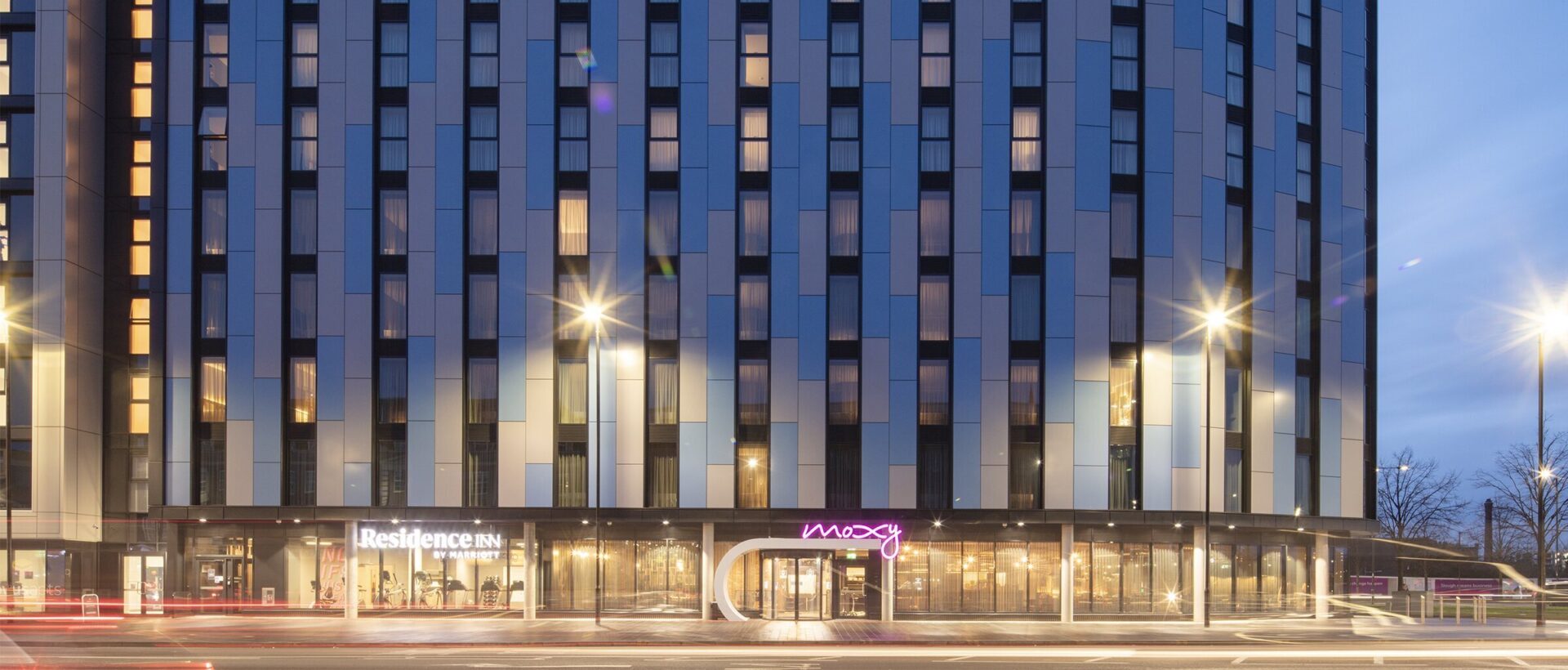
- Regional Regeneration: High-profile schemes – such as the dual-branded Moxy & Residence Inn development in Slough, alongside council-supported town centre revivals in places like Leicester and Coventry – demonstrate how public-private collaboration can raise the benchmark for local hotel stock.
- Andy Burnham’s Regional Vision: In Greater Manchester, regional leadership is pushing mixed-use placemaking and net-zero targets. Local authorities are recognising that high-quality hospitality assets drive footfall, boost the evening economy, and catalyse wider urban investment.
- Bridging Public and Private Objectives: Successful delivery requires project managers who understand both public sector compliance and private development yields, ensuring complex town centre sites remain viable and on schedule.
Wellness as 'Calm in a Crazy World': Structural Design, Not an Amenity
In a fast-paced and unpredictable global climate, consumer demand has pivoted sharply toward environments that offer restorative, calm experiences. Wellness is no longer viewed as a nice-to-have; it is becoming a guiding design framework across the entire property.
This shift directly influences how we approach space planning and fit-out management:
- Acoustic and Thermal Comfort: Creating genuine "calm" requires clever building envelope design, high-performance acoustic isolation and natural ventilation systems.
- Biophilic and Restorative Interiors: Incorporating natural light, biophilic elements and intuitive spatial layouts that reduce friction across the guest journey.
- Spatial Efficiency: Integrating wellness into guest rooms and public spaces efficiently ensures that restorative design enhances guest satisfaction without sacrificing key room-count economics.
The Direction of Travel
Heading into AHC 2026, the takeaway for developers, operators and local authority partners is simple:
- The hospitality market remains full of opportunity, but delivery requires sharper cost advice earlier, creative project controls and a clear strategy for climate and market resilience.
At Pulse Consult, we specialise in helping clients navigate these complexities across project management, cost management, quantity surveying and principal design.
Attending AHC in Manchester? Connect with James O’Keeffe, Sophia Stylianou or the Pulse Consult team to discuss how we can bring certainty, creative cost control, and delivery expertise to your next hospitality scheme. Contact us today.